


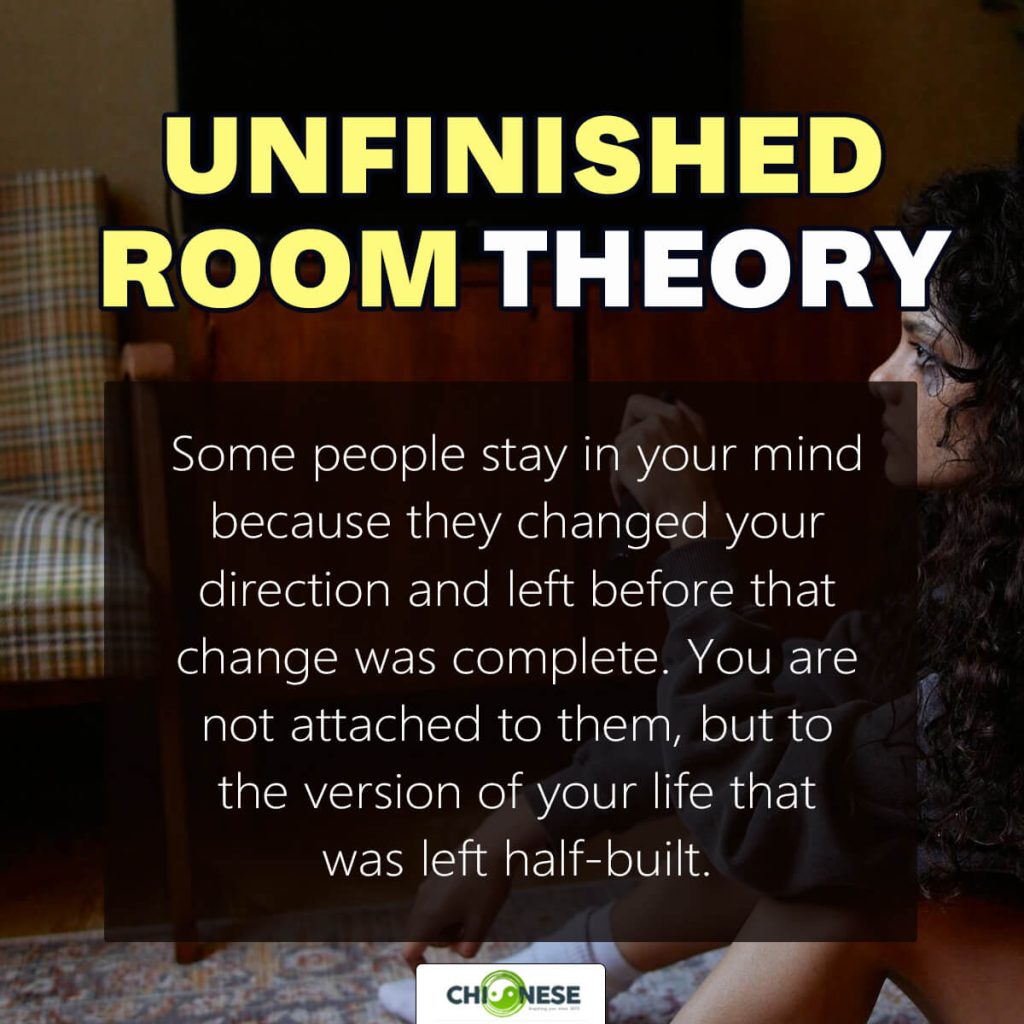
The unfinished room theory is a metaphor shared widely on TikTok that explains why certain people and life chapters continue to affect you long after they end. The theory suggests that your life can be imagined as a house made up of rooms, where each room represents a relationship, phase, or version of yourself.
When someone enters your life, they step into one of these rooms and change it. Some people add stability, habits, or emotional comfort. Others create conflict or leave behind emotional clutter. And some begin to change the space completely, only to leave before the process is finished.
An unfinished room is created when a person alters your direction, identity, or emotional state and then leaves before that change settles. The old version of the room is gone, but the new one was never completed. According to the theory, this is why certain connections linger in your thoughts. You are not attached to the person, but to the incomplete chapter they left behind.
This theory is often used to explain recurring thoughts, unresolved feelings, and why moving on can feel difficult even when a relationship is clearly over. It frames emotional attachment as a response to unfinished change rather than nostalgia or regret.
How People Affect Your “Rooms”
Not everyone who enters your life leaves the same kind of impact. The unfinished room theory explains this through how people treat the rooms they enter.
Some people decorate the room. They add things that stay with you – confidence, habits, joy, skills, or even a new way of seeing yourself. When they leave, the room still feels complete. You might miss them, but the space works. You can live in it.
Other people make a mess. They bring chaos, conflict, or emotional clutter. When they leave, the room feels dirty or uncomfortable, but at least you know what needs to be cleaned. With time, effort, and distance, you can restore the space.
Then there are people who rearrange the furniture. They don’t add or destroy much, but they change how everything fits together. They shift your priorities, challenge your routines, or alter how you think. The room is different afterward, but it still functions.
And then there is the group that makes this theory hit so hard. Some people start renovating the room and leave halfway through.
The Meaning of the Unfinished Room

When someone begins a renovation, they tear things down. Walls come down. Floors are ripped up. The old version of the room is gone, but the new one is not finished yet.
In life, these are the people who:
- Change how you see yourself
- Promise a future that never fully arrives
- Open emotional doors they never help close
- Push you into a transition and then disappear
After they leave, the room is unusable. You can’t comfortably go back to how things were, and you can’t move forward either. The space feels stuck. Exposed. Incomplete.
This is why these people are often the hardest to get over. It’s not always because they were perfect or even good for you. It’s because they interrupted a transformation that never got completed.
You’re not missing the person as much as you’re missing the version of yourself you were becoming while they were there.
Why the Mind Keeps Going Back
According to the unfinished room theory, the mind revisits certain memories because it’s trying to finish what was started.
You may replay conversations. You may imagine different endings. You may wonder what would have happened if things had continued just a little longer.
The room feels unresolved, so your mind keeps walking back into it.
This explains why:
- You think about someone long after the connection ended
- Certain memories resurface during quiet moments
- Letting go feels harder than logic would suggest
The room was never completed, so the mind keeps trying to complete it.
It’s Not About Blame

This theory doesn’t frame anyone as a villain. People leave rooms unfinished for many reasons. Fear. Timing. Emotional limits. Life circumstances. The point is not to stay stuck in who did what wrong. The point is to recognize why the room feels the way it does.
Once you understand that the discomfort comes from incompletion rather than longing, something shifts. You stop asking why you can’t forget them and start asking what the room still needs.
Finishing the Room Yourself
Most TikTok creators who talk about the unfinished room theory end with the same conclusion: you are allowed to finish the renovation yourself.
You don’t need the person to come back. You don’t need answers from them. You don’t need an apology or an explanation. You get to decide how the room looks now.
That might mean redefining who you are without them. It might mean rebuilding confidence they disrupted. It might mean closing the door on that room and choosing not to live there anymore.
Finishing the room does not mean pretending it never mattered. It means accepting that it mattered, and that it’s now yours to complete.
Why Certain Chapters Refuse to Stay in the Past
The unfinished room theory resonates because it removes shame. It explains emotional attachment without calling it weakness. It gives language to experiences many people share but rarely articulate.
You are not broken for revisiting certain chapters. You are not stuck because you miss someone. And you are responding to an unfinished space in your life.
Once the room is finished, something changes. The urge to return fades. The memories lose their grip. The space either becomes livable again or something you no longer need to enter.
And that’s the power of this theory. It reminds you that your life is your house, your rooms are yours, and even if someone leaves mid renovation, you still get the final say on how the room turns out.
More Theories Worth Exploring
- The Invisible Guest Theory: Why You’re Not Being Watched
- The Invisible String Theory: Are We Secretly Connected?
- Broken Bone Theory Explained: Why Some People Never Get Fractures
- TikTok’s “Meeting Twice” Theory: Coincidence or Meaning?
- Antarctica Ice Wall Theory Explained: Why Some Believe the World Has an Edge