

Your kitchen carries a lot of weight in Feng Shui, not because it needs to look perfect, but because it’s where nourishment happens. It’s where heat, food, routine, and care come together every single day. At the center of all that sits the stove.
In Feng Shui, the stove represents resources, vitality, and how you sustain yourself. That’s why it’s often linked to wealth in a very practical sense: your ability to provide, receive, and maintain stability in everyday life. If you’ve just moved into a new place or you’re trying to improve the energy in your kitchen, the way your stove is placed matters more than most people realize.
What the Stove Represents in Feng Shui
Traditionally, the stove is tied to Fire energy and to how resources enter your life. That includes money, but also energy, motivation, and physical strength.
A stove that feels exposed, rushed, or unstable can subtly mirror feeling unsupported or drained in daily life. A stove that feels grounded and protected tends to support routine, consistency, and a calmer relationship with effort and reward.
This is why Feng Shui focuses less on superstition and more on how the stove is positioned in relation to movement, doors, and other elements.
Best General Stove Positions
There is no single “perfect” direction that works for every home. Classical Feng Shui adjusts to layout first, direction second.
That said, these guidelines are widely accepted:
- A stove should feel supported from behind, ideally against a solid wall.
- The cook should not feel startled or rushed while cooking.
- The stove should not sit directly in line with major movement paths.
In practice, this means:
- Seeing the kitchen entrance while cooking is helpful, even if indirectly (via reflection or angle).
- Being directly faced with a door while cooking is not ideal, because it creates a sense of constant interruption.
Directions: What’s Commonly Used (and What’s Misunderstood)

You’ll often see claims like “the stove must go in the southeast” or “never put it in the north.” That’s an oversimplification.
- South, southeast, and east-facing stove placements are commonly considered supportive because they align Fire with Wood or Fire energy.
- North-facing stoves can feel conflicting because North is Water energy, which weakens Fire. This doesn’t mean disaster. It just means balance matters more.
- West placements are not neutral for everyone. In some cases, they can feel draining, especially if the kitchen already lacks light.
Direction is secondary to how the stove relates to doors, sinks, and walkways.
Stove and Sink: Why This Pair Gets So Much Attention
This part is rooted in classical Feng Shui.
The stove (Fire) and sink (Water) represent opposing elements. When they sit directly next to each other or face each other without separation, it can create energetic tension.
In daily life, this can show up as:
- Irritability while cooking
- Feeling rushed or scattered
- A sense that tasks take more effort than they should
If moving them isn’t possible, simple buffering helps:
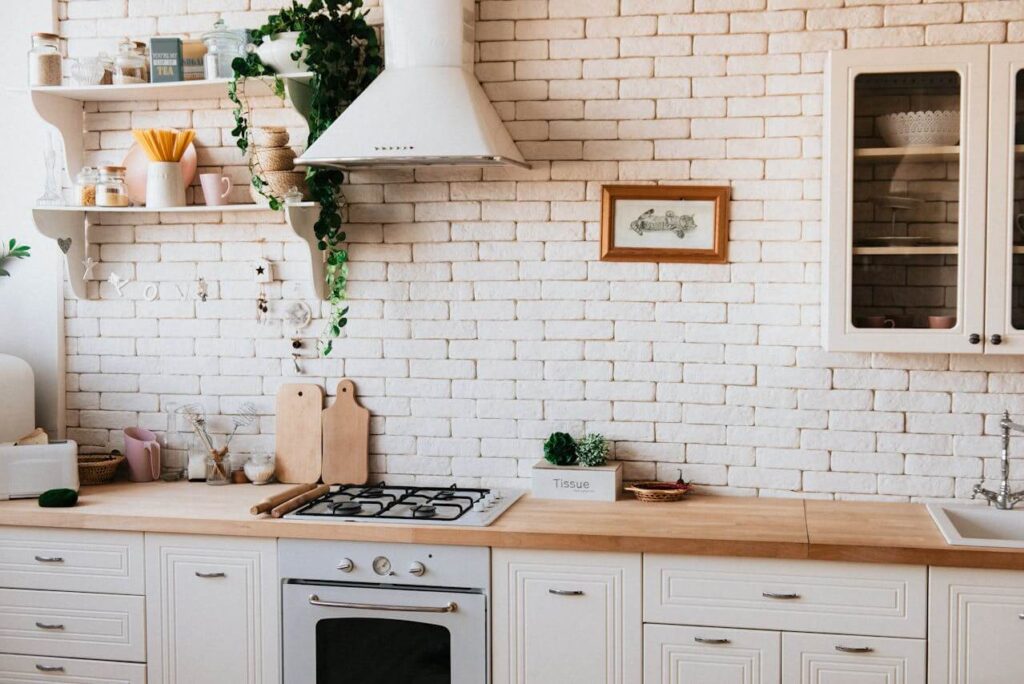
- A wooden cutting board between them
- A small plant
- A ceramic or stone item
These act as a neutral bridge. No rituals required.
Stove Facing the Door: Why It’s Discouraged
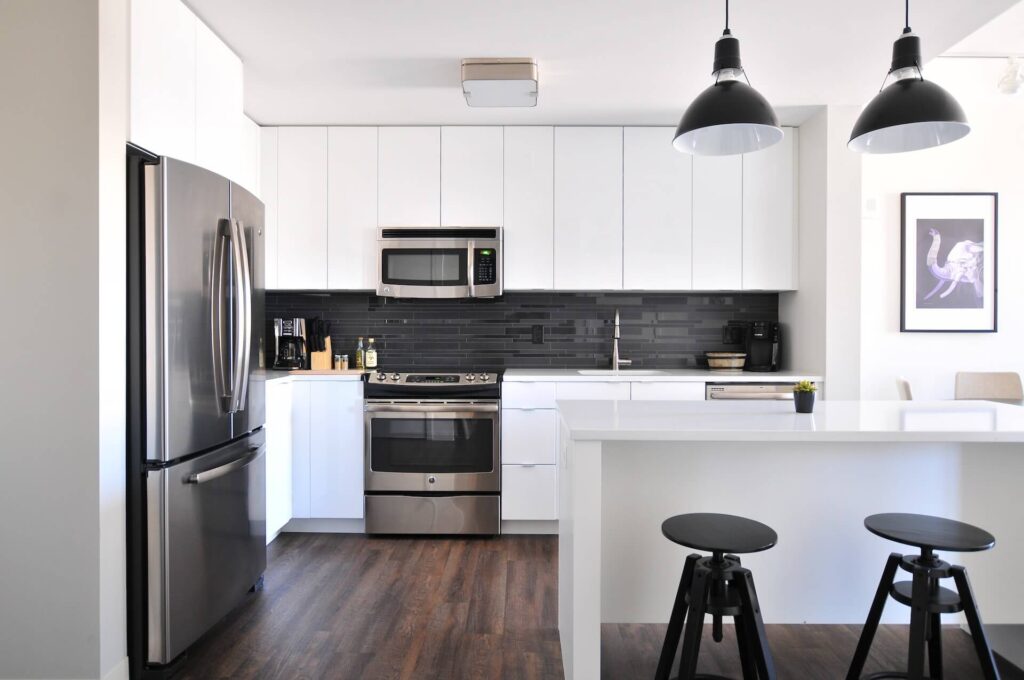
When the stove directly faces the kitchen door, it places the cook in a constant state of alertness. You’re exposed while using the most active element in the home.
Energetically, this can feel like:
- Resources going out as fast as they come in
- Difficulty settling into routine
- Mental exhaustion around daily tasks
If relocation isn’t an option, visual softening helps. This can be:
- A kitchen island
- A plant
- A partial divider
- Even adjusting angles so the stove is no longer directly aligned
Ventilation, Cleanliness, and Function Matter More Than Direction
This part is often overlooked, but it’s one of the most important. In Feng Shui, a working stove matters more than a perfectly placed one.
That means:
- All burners should function
- Grease buildup should be cleaned regularly
- Ventilation should be used
A stove that’s dirty, broken, or rarely used weakens its symbolic role. Not because it’s “bad luck,” but because it reflects neglect of nourishment and effort.
Balancing the Stove’s Fire Energy
You don’t need to “add cures.” You just need balance.
Helpful elements around a stove include:
- Wood (cutting boards, plants, cabinets)
- Earth (ceramic tiles, stone counters)
- Metal (handled carefully, not dominating)
Too much Fire (red decor, constant heat, visual clutter) can feel overstimulating. Balance calms the space.
If Your Stove Placement Isn’t Ideal
Most homes don’t follow textbook Feng Shui. That’s normal. What matters is how the space feels to live in.
If cooking feels stressful, rushed, or draining, look at:
- Door alignment
- Sink proximity
- Visual clutter
- Ventilation
- Whether the stove feels protected or exposed
Small changes often make a noticeable difference.
How to Work With What You Have
In Feng Shui, the stove is about how supported you feel while sustaining yourself, not about luck tricks or rigid rules
A stove that’s grounded, functional, and placed with awareness tends to support consistency, energy, and ease. One that feels exposed or chaotic often mirrors stress that shows up elsewhere in life.
You don’t need perfection, a full kitchen remodel, or new materials. You just need a setup that allows cooking to feel steady instead of tense. That’s where Feng Shui actually starts working.