

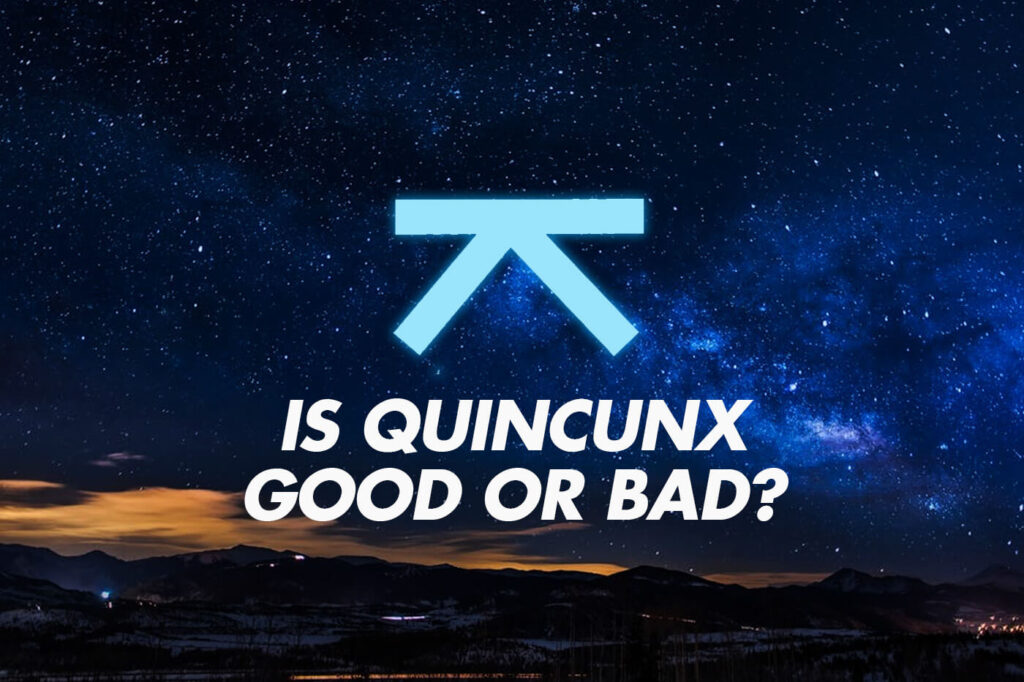
A quincunx in astrology is a minor aspect in which two planets are 150 degrees apart, also described as being five signs away from each other. On many chart sites, it appears as a thin green line (or sometimes purple, depending on the site), linking two planets that do not share the same element or modality. For this reason, the quincunx, also known as the inconjunct, often feels like a mismatch that still demands attention.
Astrologers have argued about the quincunx for a long time because it never feels straightforward. It does not behave like a square that creates obvious conflict, or a trine that makes things flow. The quincunx tends to show up as ongoing adjustment, the feeling that two parts of life are connected, but they do not cooperate naturally.
What Is a Quincunx Aspect
A quincunx happens when two planets are five signs apart. That distance usually means they share very little in common. Different elements, different modalities, different priorities.
Examples by sign logic:
- Virgo and Aquarius
- Taurus and Sagittarius
- Cancer and Sagittarius
- Aries and Virgo
- Capricorn and Gemini
It can feel like trying to run two operating systems on the same computer. Both are real. Both matter. They just do not speak the same language without effort.
Why the Quincunx Feels So Odd
Quincunxes often create a specific type of discomfort: persistent and difficult to define. You may sense that something is off, yet struggle to pinpoint exactly what it is until circumstances make the imbalance clear and require adjustment.
Common quincunx themes:
- Constant fine-tuning: changing habits, changing timing, changing approach
- A blind spot revealed over time: you miss the issue until it repeats
- Competing needs: both sides matter, but they cannot be satisfied the same way
- A “body-first” signal: you feel it as tension or unease before you can explain it
My astrology teacher once described the quincunx as a small stone in your shoe. It creates discomfort, yet you can still walk with it. At times you barely notice it, until it shifts position and suddenly demands your full attention.
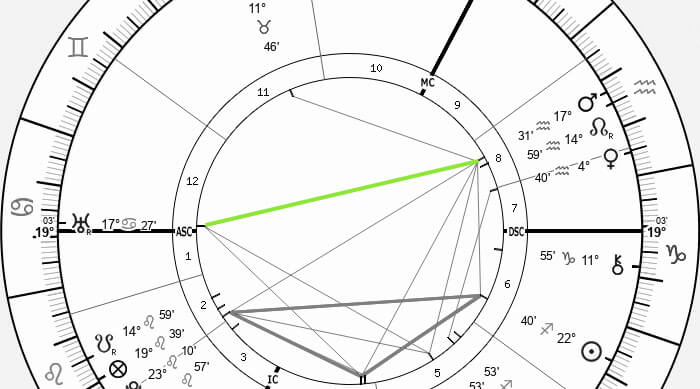
“Good” or “Bad” Aspect?
The quincunx is neither good nor bad. It does not carry doom, nor does it promise ease. I do not approach it with fear. I see it as a sensitive point in the chart that keeps asking for adjustment, sometimes quietly, sometimes persistently.
If a square pushes you into direct confrontation, a quincunx asks for correction. The lesson unfolds through small shifts, repeated awareness, and gradual refinement.
In charts, quincunxes often show up as:
- a recurring need to recalibrate
- growth that develops through repetition rather than sudden breakthroughs
- the sense that your approach needs refining until it truly fits your lived reality
Natal Quincunx
A natal quincunx in the birth chart describes a lifelong theme of adjustment between two planets that want different things, in different ways. It can show where you are talented but inconsistent, or where you carry a tension that quietly shapes your decisions over many years.
At times, a natal quincunx brings confusion, especially when it involves Neptune, the Moon, the Sun, or Mercury.
For example:
- Neptune quincunx Sun or Moon can correlate with uncertainty around identity, direction, or emotional needs. There can be phases where you feel out of alignment without knowing why. The answer does not arrive on command. It takes time, experience, and self-observation.
- Mercury quincunx Saturn can create a mind that edits itself too harshly, then compensates by over-explaining or over-justifying.
- Venus quincunx Pluto can pull someone between comfort and intensity, attachment and control, without an easy middle ground.
The key with natal quincunxes is pattern recognition. What situations repeat? Where do you keep adjusting yourself to make two parts of life coexist? The chart is pointing to a place where balance comes from learning a different method, not from forcing one side to dominate.
Quincunxes also tend to reveal themselves gradually. Their purpose becomes clearer through experience. Often, when a transiting planet activates the natal quincunx, insight surfaces.
For instance, if you were born with Jupiter quincunx your Sun, each Jupiter return (every 12 years) may highlight that tension again. You might gain a clearer understanding of how much space you take up, how much you give, or how your confidence expands and contracts. The activation often brings a clue.
Quincunx Transits
A quincunx transit occurs when a moving planet forms a 150-degree aspect to a natal planet, marking a temporary period of adjustment, discomfort, and recalibration. During these times, it can feel as though something in your life needs fine-tuning, even if nothing outwardly dramatic is happening.
From observation, quincunx transits often unfold in phases:
- the first contact brings awareness: a sense that “this isn’t working anymore”
- the opposition that follows can open the theme fully or expose what has been building beneath the surface
- the final quincunx pass often coincides with action: a conversation, a boundary set, a shift in routine
These transits are more noticeable when they involve personal planets, angles, or the lunar nodes, because they land directly in daily decisions and relationships.
At the same time, a quincunx does not operate like a square. It does not force confrontation. It adjusts gradually, and sometimes the shift is only clear in hindsight.
A Personal Example
When Lilith formed a quincunx to my North Node, I began to feel that an attachment I had been holding onto was no longer right for me. There was no clear external event that caused it. It felt as if I sensed the imbalance before I could explain it logically.
During the first pass, it remained at the level of thought. I considered blocking. I drafted messages. I went back and forth. When the aspect moved away, the urgency eased and the fixation softened.
When the transit returned later, the same theme resurfaced, but this time I acted. Message sent. Unfollowed. The situation resolved.
This is often how quincunxes operate: awareness comes first, action follows later, and the adjustment happens in a simple, concrete way.

Why You Might Miss Quincunxes
Quincunxes do not demand attention the way some other aspects do. They can remain in the background while you focus on transits that appear more urgent or visible.
In practice:
- In transits, you may only understand what shifted after some time has passed.
- In natal charts, the pattern often becomes clear only after it repeats enough to be recognized.
- In Yods, the quincunxes function as the structural links holding the configuration together, even when daily life feels relatively ordinary.
I tend to notice quincunxes most when they involve the Sun, Moon, Mercury, Venus, or Mars, because those planets describe immediate experience. Outer-planet quincunxes are present as well, but they usually unfold across longer phases of life rather than in specific moments.
The Quincunx in a Yod
A Yod is made of two quincunxes pointing to an apex planet. People love calling it the “Finger of Fate,” but what matters in real life is simpler: the apex gets pressured into development.
If you have a Yod, pay attention to:
- which planet is the apex
- which houses are involved
- how tight the orbs are
- whether the planets are personal or generational
The tighter the configuration, the more you will recognize it as a repeating theme, not a one-time event.
Living With the Quincunx
The quincunx is astrology’s awkward connection: two parts of life linked together, but not naturally compatible. It can be irritating. It can be confusing. It can also be the reason you develop real skill, because you are forced to refine, adjust, and get honest about what works.
If you have quincunxes in your chart, track them over time. Watch what repeats. Watch what you keep recalibrating. That is where the chart is shaping you.
More on Quincunxes in Natal and Transit Charts
See how this 150-degree aspect unfolds across different life phases:
- Neptune Quincunx Sun (Natal, Transit, Synastry)
- Chiron Quincunx Venus: Love Wounds in Natal, Transit, & Synastry
- The Rarest Astrology Placements and Their Meanings