

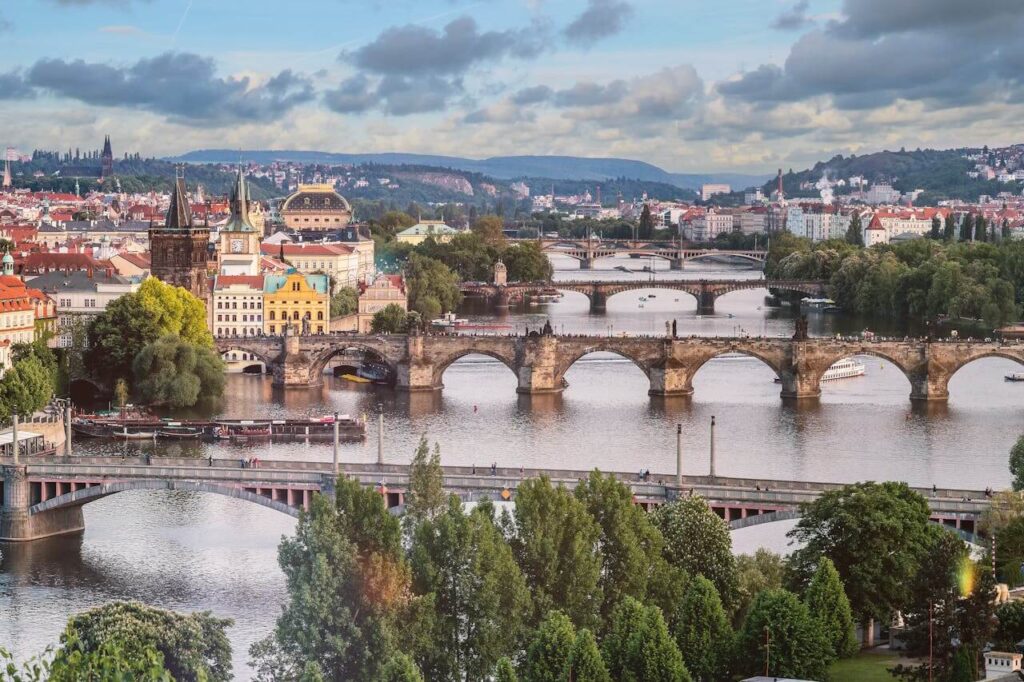
Walk through Prague, and you’ll see churches almost everywhere. There’s St. Vitus Cathedral overlooking the city, the Church of Our Lady before Týn in Old Town Square, and countless smaller chapels tucked between historic buildings. Yet many of the people walking past them have never attended a Sunday service.
The Czech Republic is one of Europe’s least religious countries. According to a 2017 Pew Research Center survey, 72% of Czech adults identified as atheist, agnostic, or having no particular religion. And this is especially interesting considering that neighboring Poland remains strongly Catholic.
As a Czech, I’ve always found our relationship with religion a little amusing. We celebrate Christmas, admire beautiful churches, and use expressions involving God, yet plenty of us have little interest in organized religion. The explanation goes back much further than the communist era.
Are Czechs Really Atheists?
Yes, atheism is widespread in Czechia, although calling everyone without a religion an atheist would be inaccurate.
The 2021 Czech census found that 47.8% of the population explicitly declared having no religious belief. Another 30.1% left the voluntary question unanswered. Among those who answered, 68.3% reported having no religious belief.
Those numbers tell us that religion plays a relatively small role in Czech society, but they also reveal an important distinction. A person who belongs to no church might still believe in God, an afterlife, reincarnation, or something beyond the physical world.
For many Czechs, religion is simply absent from everyday life. They grow up without church services, religious instruction at home, or expectations to marry in a church. Being nonreligious requires no particular explanation.
Jan Hus and the Czech Rebellion Against the Church
To understand Czech attitudes toward religion, we need to go back to the early 15th century.
Jan Hus, a Czech priest and religious reformer, criticized corruption within the Catholic Church and challenged its authority. His teachings attracted a large following in Bohemia, but he was condemned as a heretic and burned at the stake in 1415.
His execution sparked outrage and helped inspire the Hussite movement, which challenged Catholic authority decades before Martin Luther’s Reformation.
Religion became deeply entangled with Czech identity, political independence, and resistance to outside control. The Hussites fought wars, established their own religious practices, and changed the religious landscape of Bohemia.
That history helps explain why Czech skepticism toward powerful religious institutions has such deep roots. <Cite refs={[“turn212835search0″,”turn212835search4”]}/>
The Battle of White Mountain Changed Everything
Another turning point came in 1620, following the Battle of White Mountain near Prague.
The Protestant Bohemian Estates were defeated by the Catholic Habsburg forces. The consequences were enormous: Protestant nobles lost their property, religious freedom was severely restricted, and people faced pressure to convert to Catholicism or leave the country.
For generations, Catholicism was closely connected with Habsburg political authority. The church became associated with a ruling dynasty that many Czech nationalists later regarded as foreign.
This history contributed to an enduring distrust of the Catholic Church as an institution, particularly in Bohemia. The association between religious authority and political power continued to influence Czech attitudes long after the Habsburg monarchy ended in 1918.
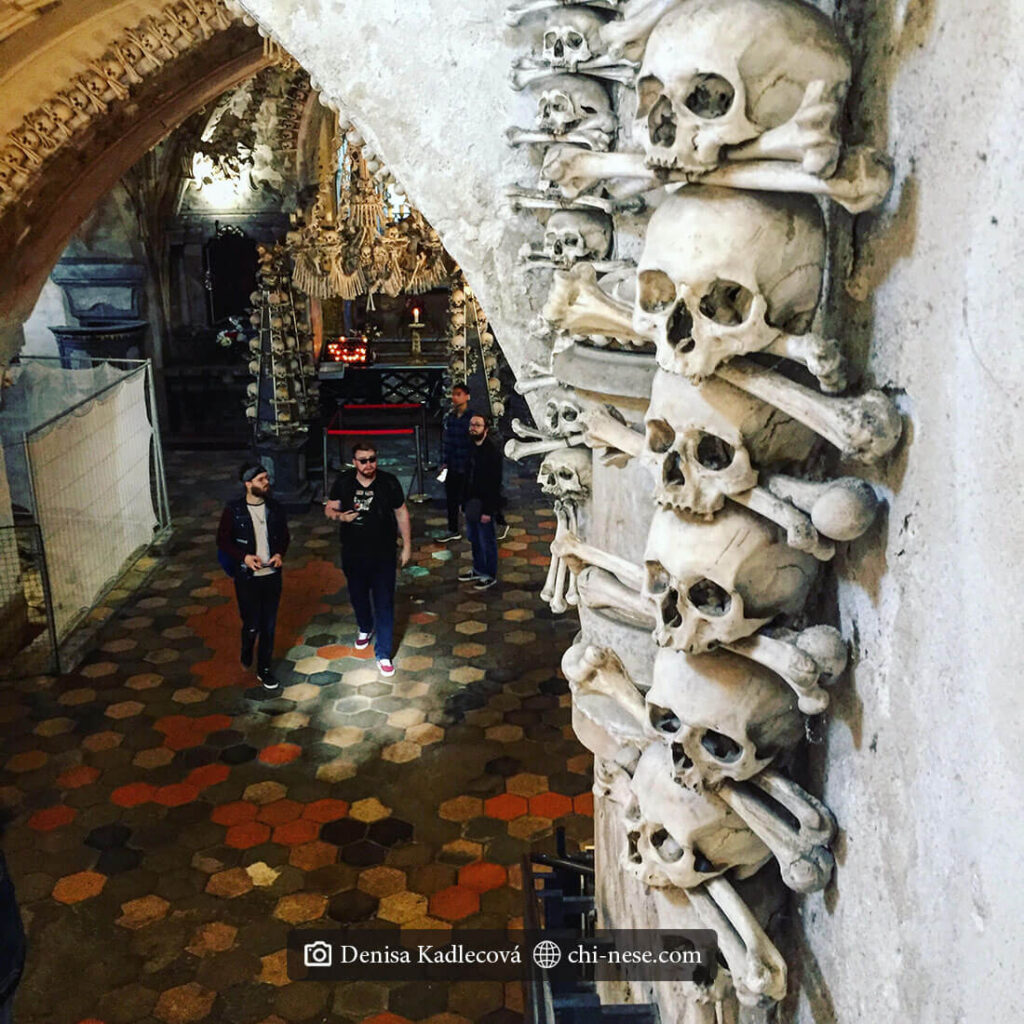
Communism Made Religion Even Less Popular
Communism certainly contributed to Czech secularism, but the country already had a complicated relationship with the church before the communist takeover in 1948.
Under the communist regime, religious organizations faced government surveillance, restrictions, and interference. The authorities controlled church activities, persecuted clergy, and promoted atheism through state institutions and education.
Children grew up in an environment where religion had little place in public life. For many families, attending church gradually stopped being part of their routine.
After the Velvet Revolution in 1989, people were free to practice religion openly again. Yet there was no widespread return to church membership. The number of people identifying with Catholicism continued to decline.
A Pew Research Center survey found that the proportion of Czech adults identifying as Catholic fell from 44% in 1991 to 21% in its 2017 survey.
Czechs Can Be Spiritual Without Being Religious
I remember asking my grandmother as a child why she went to church at Christmas but never attended Sunday services.
Her answer was simple: it was a tradition, and Christmas was the one occasion that brought the whole village together.
She wasn’t particularly religious, but she believed there was něco mezi nebem a zemí, a Czech expression meaning “something between heaven and earth.”
I’ve always thought that expression captures an interesting side of Czech culture. A person might reject the idea of belonging to a church yet still believe in fate, spirits, an afterlife, or things science has yet to explain.
You can also meet Czechs who enjoy astrology, tarot, or other spiritual interests without identifying with a religion.
For them, personal beliefs belong to their private lives. They have little interest in joining a religious organization or following its rules.
Religion in Czech Schools and Everyday Life
Religion has a very different place in Czech public life compared with countries such as Poland.
Public education is secular, and religious instruction is generally optional rather than a standard compulsory subject. Children can grow up knowing very little about the Bible, church ceremonies, or Christian teachings unless their families introduce them to those subjects.
In many Czech households, weddings take place at town halls, babies are given names without baptism, and funerals are held without religious services.
Christmas is a particularly interesting example. Families decorate trees, bake Christmas cookies, eat carp and potato salad, and exchange gifts brought by Ježíšek, the Baby Jesus.
Despite the Christian name, Ježíšek is part of Christmas tradition even in households where nobody believes in God.
Moravia Is More Religious Than Bohemia
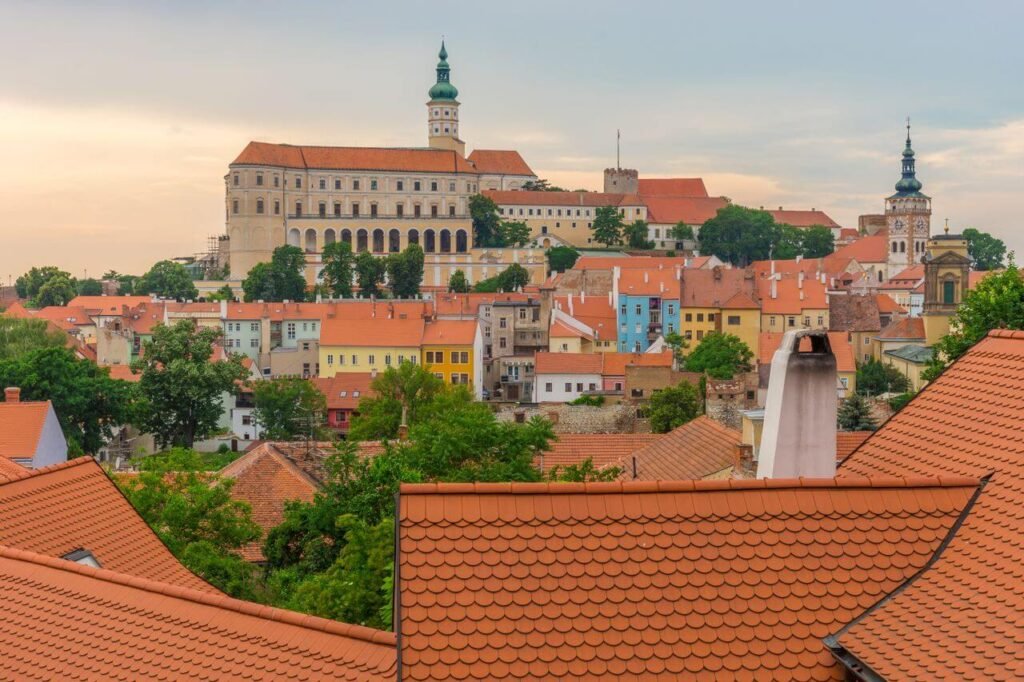
The Czech Republic also has noticeable regional differences.
Moravia, particularly its eastern and southeastern areas, has maintained stronger Catholic traditions than much of Bohemia. Churches, pilgrimages, religious festivals, and family celebrations connected with Christianity remain more prominent in certain Moravian communities.
According to the 2021 census, the Zlín Region had the highest proportion of respondents affiliated with a church or religious society, at 38.6% among those who answered the religion question.
By comparison, the Ústí nad Labem and Liberec regions in northern Bohemia had especially high proportions of respondents reporting no religious belief.
I’m originally from Central Bohemia, and visiting Moravia has always been interesting to me. The dialects, local customs, and village traditions can be surprisingly different. In certain places, religion is also much more visible in everyday community life.
Of course, Moravia has plenty of atheists, and Bohemia has practicing Christians. The difference is regional, with especially strong Catholic traditions in parts of eastern Moravia.
Why Czech Churches Are Still Everywhere
One of the most interesting things about Czechia is how much religious architecture has survived in a country where church attendance is relatively low.
Prague’s cathedrals, village chapels, roadside crosses, and Baroque monasteries are reminders of centuries during which Christianity shaped Czech art, politics, and community life.
Today, these buildings serve several purposes. Churches remain places of worship, but they are also historic monuments, concert venues, tourist attractions, and important landmarks.
You might meet a Czech who has never attended Mass but loves visiting old churches for their architecture. Or someone who has no religious affiliation yet contributes money to restore a chapel in their village.
Religious heritage remains part of Czech culture, even for people who have little interest in religious practice.
Being Czech and Being Atheist
For many Czechs, religion simply plays no role in their identity. They celebrate Christmas, visit churches on holiday, and respect historical traditions without connecting those activities to personal faith.
Czech secularism developed through centuries of religious conflict, political changes, and declining church affiliation. Communism accelerated the process, but Jan Hus, the Hussite movement, Habsburg rule, and the country’s later political history all contributed to the relationship Czechs have with religion today.
And perhaps that’s why a Czech can spend Sunday morning admiring a beautiful cathedral, then head to the pub for lunch without ever considering attending the service inside.
More About Czech Culture
- 15 Mistakes Tourists Make in the Czech Republic (and How To Avoid Them)
- What Does “Škoda” Mean? The Funny Czech Meaning Behind the Car Brand
- How Czech Are You? 9 Signs You Belong In The Czech Republic