

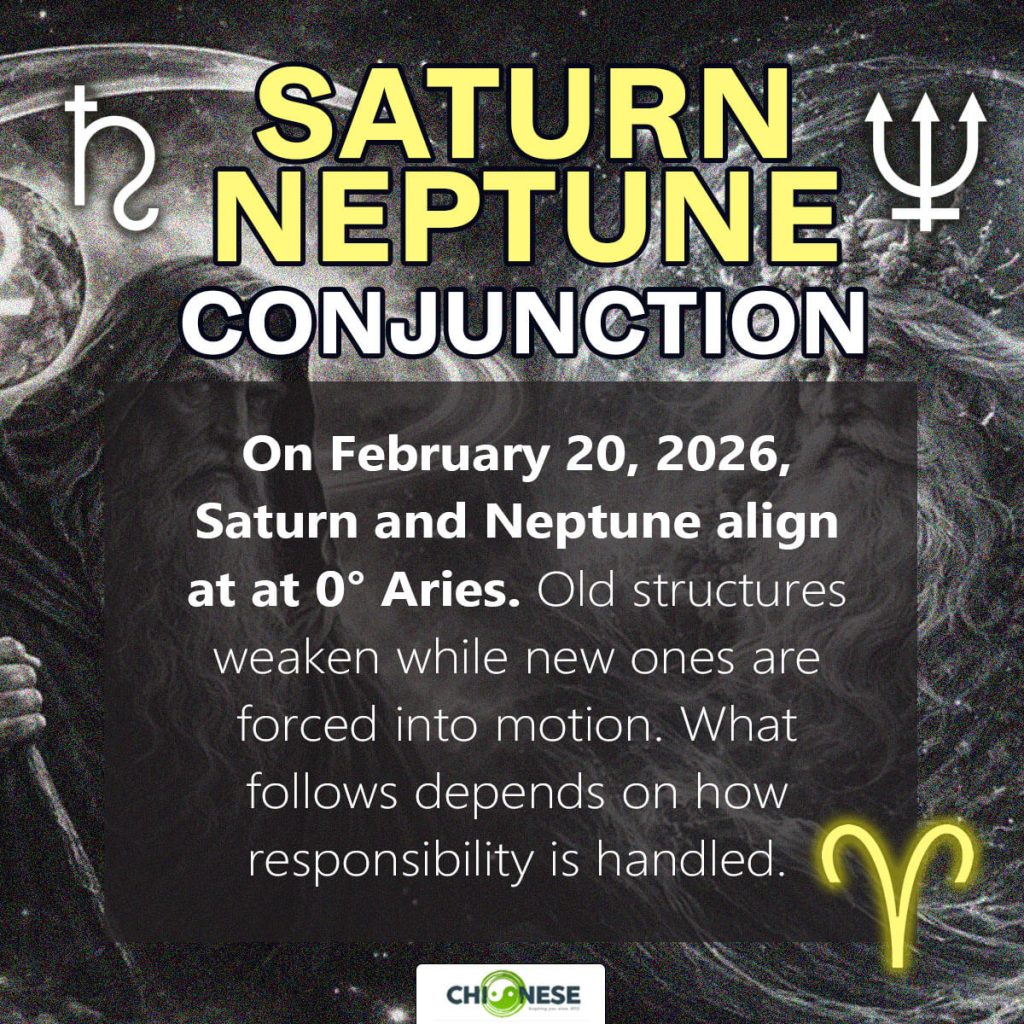
On February 20, 2026, Saturn and Neptune meet at 0° Aries, the very first degree of the zodiac. This pairing is rare. The previous Saturn–Neptune conjunction took place in 1989, but not at the Aries Point. The last time these two planets aligned at this exact degree was more than three centuries ago.
When slow-moving planets meet at the start of the zodiac, the focus shifts from isolated events to long-term direction.
Why Saturn and Neptune at 0° Aries Changes the Rules
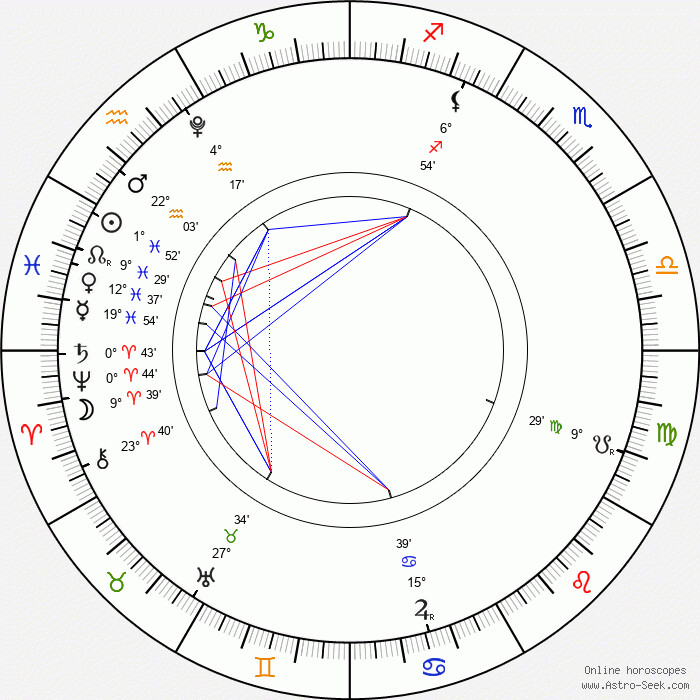
Saturn and Neptune operate on opposite principles.
Saturn governs structure, rules, boundaries, responsibility, and systems that keep reality functional. It acts like a wall or a dam, something solid that holds pressure and defines limits.
Neptune does the opposite. It dissolves structure, blurs edges, weakens certainty, and replaces clarity with belief, imagination, or confusion. It works like dense fog, where orientation is lost and outlines disappear.
When these two planets come together, certainty weakens, but new possibilities appear. Add Aries to the mix, a sign linked to initiative, impulse, and first actions.
Neither Saturn nor Neptune functions comfortably in Aries. Aries demands decisions and movement. It acts before everything is figured out, which directly clashes with Saturn’s need for control and Neptune’s tendency to drift. That friction is the core of this alignment.
This conjunction pulls ideas and unfinished visions out of abstraction and forces them into real-world situations. Something that existed only as a concept starts demanding form and accountability.
Why the Aries Point Matters
0° Aries is called the Aries Point because it marks the beginning of the zodiac cycle. It is associated with visibility, public relevance, and moments when private developments become collective issues.
There is also a qualitative difference between early and late degrees. While 29° Aries has experience and containment, 0° Aries carries raw, untrained energy. It does not know yet how to manage anger, urgency, or assertion. It reacts first and adjusts later.
Astrologically, planets crossing this point are linked more often to collective developments than personal ones, unless you have personal planets at 0° Cancer, Libra, or Capricorn forming a square or opposition. When outer planets meet here, their impact tends to unfold on a wider scale.
A Saturn–Neptune conjunction at this degree points to the beginning of a long restructuring process. Existing frameworks lose coherence before new ones are established. What once seemed stable may come apart, usually as part of the transition. The in-between phase lacks stability, yet it serves a purpose.
This marks the opening of a new chapter, not the resolution of an old one.
February 2026 as a Starting Line

This alignment does not bring immediate clarity. Saturn and Neptune move slowly, and their influence unfolds over time.
Saturn wants plans. Neptune blurs them. Aries pushes forward regardless.
Whenever I look at this combination, I think about the weakening or collapse of existing alliances. That could involve structures like the EU or NATO, or one falling first and others following later. Aries, ruled by Mars, emphasizes self-interest, territorial instincts, and reactive decisions. It prioritizes “me” over “we.”
Saturn in Aries can build defenses that hold things together. Neptune introduces uncertainty into those same defenses. The outcome depends on how much clarity can be maintained while decisions are being made.
How This Shift Plays Out by Element
Fire Signs (Aries, Leo, Sagittarius): Fire signs feel this strongly. Visibility increases, and leadership roles appear whether they are requested or not. What matters is alignment between action and intention. People follow consistency more than performance.
Earth Signs (Taurus, Virgo, Capricorn): Earth signs are pushed to deal with emotional reality alongside material systems. Structures that ignore human limits stop functioning. Stability comes from understanding what people actually need, not just what looks efficient.
Air Signs (Gemini, Libra, Aquarius): Communication and coordination become central. Air signs help translate complex developments into language others can understand. Networks, alliances, and shared frameworks are tested and reorganized.
Water Signs (Cancer, Scorpio, Pisces): Questions around resources come into focus. This includes emotional, physical, and collective resources. Water signs often sense imbalance early and are pushed to respond in practical ways.
Overall, Gemini, Virgo, Sagittarius, and Pisces may experience relief as both Saturn and Neptune finally leave Pisces and stop forming ongoing hard aspects to these signs.
What Might Happen
February 20, 2026 marks the point when plans, promises, and unfinished decisions can no longer be postponed.
- Time feels faster. Decisions are made with less deliberation and more pressure. This is amplified by the Year of the Horse in Chinese astrology, which favors speed, movement, and independence over caution.
- Situations arise that test self-reliance. Support structures feel thinner. Confidence has to come from action, not reassurance.
- On a global level, long-standing alliances (EU, NATO) may strain or fragment. Aries energy prioritizes protecting one’s own position and borders rather than maintaining collective agreements.
- More people take to the streets. Aries energy is assertive. It wants to fight, protect, and win. This conjunction can coincide with an increase in protests, with more people willing to step forward and speak openly rather than stay silent.
- Aries also rules the head and brain. With both Saturn and Neptune moving through Aries, issues connected to leadership, decision-making, and command structures can become prominent. This can play out literally through matters involving the head or brain, or symbolically through clashes between leaders or “head” nations. When two centers of authority collide, escalation becomes harder to avoid.
This transit not about one event. It is a directional change. With Pluto already in Aquarius and Uranus moving through Gemini, the Saturn–Neptune conjunction is part of a wider pattern. Old systems lose cohesion, new ones are forced into place, and historically, this kind of transition is rarely smooth. Conflict often acts as the trigger.