

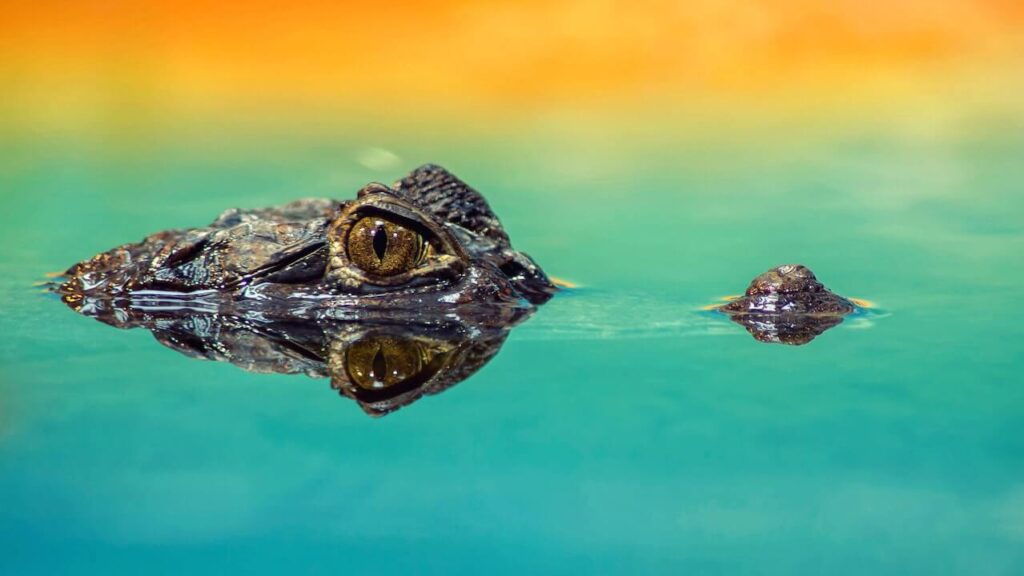
In Feng Shui, animal symbols aren’t decorative choices. They represent specific types of energy and behavior. Some animals soften a space. Others stabilize it. And a few exist to guard, defend, and hold territory. Yes, the crocodile belongs firmly in that last group.
This is not a light symbol. It’s not meant to calm emotions or make a home feel cozy. The crocodile represents survival intelligence, authority, patience, and controlled power. It shows up in Feng Shui when themes of protection, boundaries, and long-term advantage matter more than comfort.
What the Crocodile Represents in Feng Shui
The crocodile is linked to the Water element, but not the emotional or flowing side people usually associate with water. This is deep, strategic water. Still on the surface. Decisive underneath.
In Feng Shui symbolism, crocodiles represent:
- Protection and vigilance
- Authority and dominance over territory
- Patience paired with timing
- Survival instinct and long-term resilience
- Wealth protection rather than fast gain
Unlike symbols that attract opportunity, the crocodile is more about keeping what you have and not losing ground.
Strength and Protection Energy
Crocodiles have survived unchanged for millions of years. That’s why Feng Shui associates them with endurance rather than expansion.
When placed intentionally, a crocodile symbol supports:
- Standing your ground in competitive environments
- Holding authority in business or leadership roles
- Creating energetic boundaries around a home or office
This makes crocodile imagery more suitable for workspaces, offices, or entrances than personal or emotional spaces. It’s a symbol of quiet control, not dominance through force.
Adaptability and Strategic Opportunity
One of the most important crocodile traits is patience. It doesn’t chase constantly. It waits. It observes. It acts when timing favors it.
In Feng Shui terms, this energy aligns with:
- Strategic thinking
- Long-term planning
- Choosing battles carefully
- Acting only when conditions are right
That’s why crocodile symbols are often used by people navigating financial pressure, legal matters, leadership roles, or competitive fields. It supports awareness rather than impulsiveness.
Caution, Boundaries, and Self-Control
The crocodile also carries a warning. Not fear-based, but practical.
It reminds you that:
- Power without control becomes destructive
- Overexposure weakens authority
- Timing matters more than speed
If someone tends to speak too fast, react emotionally, or act before reading a situation fully, crocodile symbolism reinforces restraint and discernment. This is one of the few Feng Shui animal symbols that actively supports self-discipline.
Where to Place a Crocodile in Feng Shui
Placement matters more with strong symbols like this.
Best placements:
- Near the entrance (but not directly facing the door): Acts as a protective presence for the home or office.
- North area (career and direction): Supports professional authority, decision-making, and strategic growth.
- Southeast area (wealth protection): Not for attracting money, but for stabilizing finances and preventing loss.
- Near water features: Aligns naturally with the Water element and reinforces its role.
Where to avoid placing it:
- Bedrooms
- Bathrooms
- Children’s rooms
- Meditation or rest spaces
The crocodile’s energy is alert and watchful. Those spaces need something else.
Using Crocodile Symbols Thoughtfully
This isn’t a symbol to scatter around casually. One well-placed crocodile figurine, artwork, or motif is enough. More than that can make a space feel tense or overly guarded.
It works best when:
- The intention is clear
- The space is orderly
- The symbol feels deliberate, not decorative
If it feels intimidating rather than supportive, it’s probably not the right symbol for that environment.
Strength That Waits
In Feng Shui, the crocodile is about knowing when to move and when not to. It represents strength that doesn’t need constant action, protection without panic, and authority that comes from awareness rather than control.
Used intentionally, it supports stability, boundaries, and long-term advantage.
Used carelessly, it simply becomes a mismatch.
Like the crocodile itself, this symbol works best when it knows exactly where it belongs.