

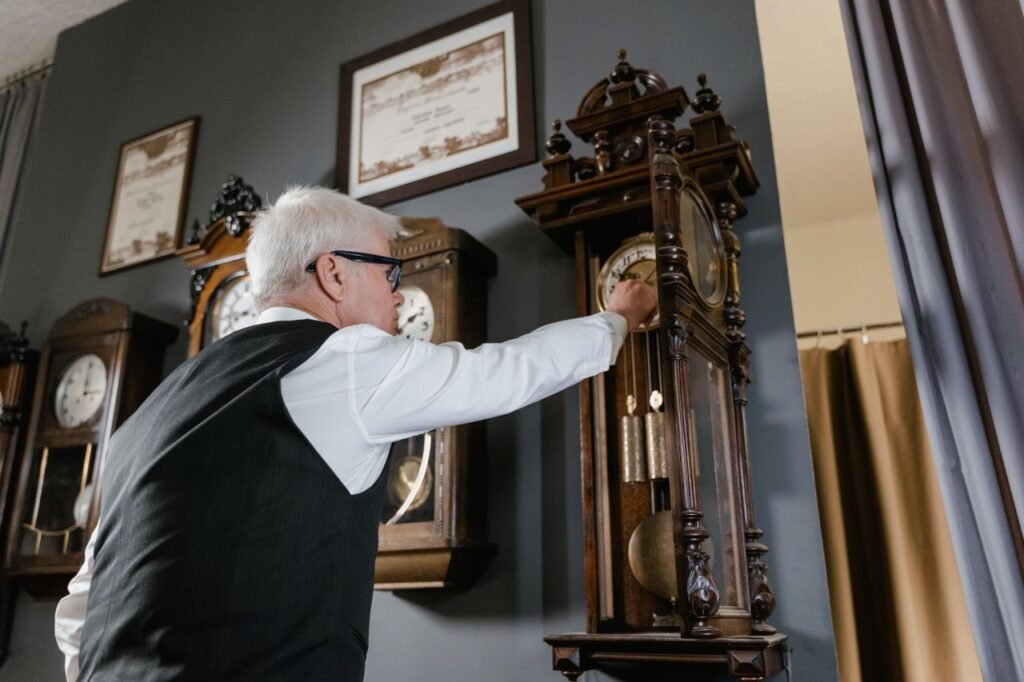
In Feng Shui, a grandfather clock represents movement, time, continuity, and active chi. Its moving hands and pendulum keep energy in motion, and its regular ticking and chimes add sound to the room. A well-maintained clock can be a positive addition to the home, particularly in active shared spaces.
Placement is important because a grandfather clock has a much stronger presence than a small wall clock. It is tall, heavy, constantly moving, and often audible throughout the house.
Is a Grandfather Clock Good Feng Shui?
Yes, as long as the clock works properly and is kept in good condition. Clocks represent the passage of time, so movement is an important part of their Feng Shui symbolism.
A stopped clock has the opposite association. It represents halted movement, delays, and stagnant chi. If an old grandfather clock no longer works, repairing it is preferable to leaving it permanently stopped as decoration.
Accurate time is also preferable. A clock that constantly runs too fast or too slow can symbolically connect the household with rushing ahead or falling behind.
Time, Movement, and Family Legacy
The moving pendulum represents continuous movement and the passage of time. Because it never stays on one side for long, it keeps a steady rhythm in the room and is associated with chi continuing to circulate instead of becoming stagnant.
The tall wooden case adds stability, longevity, and Wood energy. This becomes especially meaningful with an antique clock that has stayed in the same family for generations. A clock inherited from parents or grandparents can represent ancestry, family continuity, and the connection between past and present.
The chime brings sound into the symbolism too. Regular chimes activate the room at set intervals, which suits living rooms, hallways, and other active areas of the home. In a bedroom, the same ticking, movement, and chiming can introduce too much activity for a space intended for sleep.
The Best Places for a Grandfather Clock
A living room is usually a good choice. It is an active part of the home, and the clock can become part of the room without disturbing sleep.
The dining room can also work well, particularly when the family regularly gathers there. An inherited clock can be especially appropriate in this area because of its connection with family continuity.
A hallway or spacious entry area gives the clock enough room for its height and movement. Avoid squeezing such a large object into a cramped corner or placing it where people constantly have to walk around it.
The clock should stand securely against a solid wall and have enough space around it to look intentional instead of crowded.
Placements to Avoid
The bedroom is usually unsuitable for a grandfather clock. Ticking, pendulum movement, and hourly chimes introduce activity into a room intended for sleep. A large clock looming close to the bed can also dominate the room visually.
Avoid placing it directly opposite the front door. In Feng Shui, the entrance controls how chi enters the home, and a large moving clock immediately facing it can create an overly active entrance.
A clock also belongs in a room that is actually used. Leaving an imposing grandfather clock in a dusty storage room, neglected hallway, or cluttered corner works against the idea of keeping chi active.
Wood, Color, and the Five Elements
Most traditional grandfather clocks are made from wood, giving them a natural connection with the Wood element, which represents growth and vitality.
Dark walnut, mahogany, oak, and cherry clocks have a heavier visual presence, making them suitable for larger rooms that can accommodate substantial furniture. Lighter woods create a less imposing effect in smaller or brighter interiors.
Metal pendulums, weights, and decorative details introduce the Metal element naturally, so there is usually no need to surround the clock with extra Feng Shui objects simply to “balance” it.
A Broken or Stopped Grandfather Clock
A grandfather clock that has stopped receives much more attention in Feng Shui than an ordinary decorative object because its entire purpose is to measure moving time.
If the clock breaks, have it repaired when possible. If you no longer intend to use it, storing or removing it makes more sense than keeping a permanently stopped clock in a prominent part of the home.
The same applies to neglected clocks covered in dust or cobwebs. An antique can carry family history without looking abandoned.
Keep the Clock Moving
A grandfather clock works best in Feng Shui when it does what it was built to do: keep time, move, and bring rhythm into the room. Wind a mechanical clock regularly, correct the time when necessary, and keep the case, glass, pendulum, and surrounding area clean.
A beautiful inherited clock does not need charms, crystals, fountains, or elaborate cures around it. Give it a stable position, enough room, and regular care. Its movement, sound, craftsmanship, and connection with passing generations already give it plenty of presence.
More Feng Shui Tips for Your Home
- Groundbreaking Ceremony for a House According to Feng Shui
- The Secret to Perfect Feng Shui Nightstands: Simple Changes That Work
- Feng Shui Stove Placement: What Helps and What Disrupts
- Feng Shui Car Plates: Numbers That Bring Luck (and Those to Avoid)
- Feng Shui and Deceased Belongings: Should You Keep Them?